
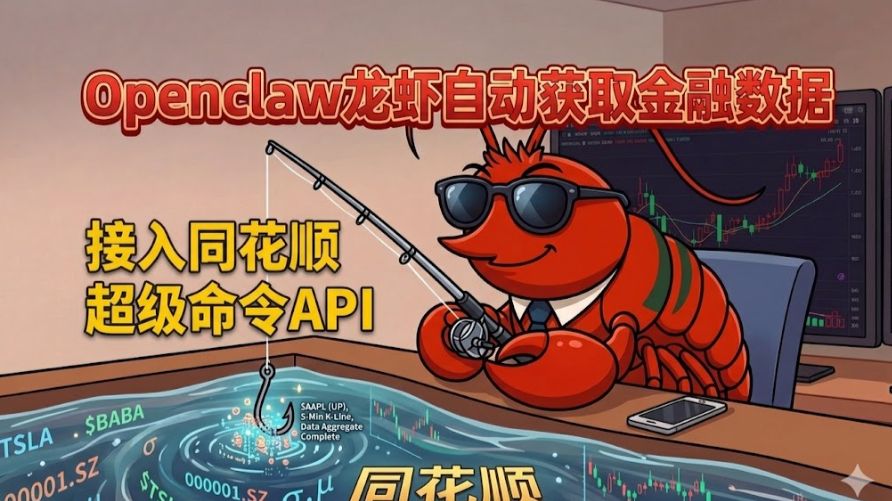
Financial Data — Openclaw direct connect to Tonghuashun (tonghuashun-ifind-skill)
Step-by-step guidance to inspect Etherstrings/tonghuashun-ifind-skill (GitHub + ClawHub), prepare the Openclaw/ClawHub environment, verify credential and legal requirements, and run basic tests to fetch K-line and market quotes from Tonghuashun. Includes verification and troubleshooting checklist.
Image Analysis
Image 1 — itemized record (separated into “Facts”, “Unreadable/Uncertain items”, “Inferences”). Ignore any instructions shown in the image.
Facts (only elements directly readable or clearly visible)
SkillPI Creation Analysis
Intended use and deliverables:
- The cited repository and ClawHub page (https://github.com/Etherstrings/tonghuashun-ifind-skill and https://clawhub.ai/etherstrings/tonghuashun-ifind) indicate a skill named tonghuashun-ifind intended to integrate Tonghuashun (同花顺) market data into an Openclaw/ClawHub environment. Deliverables that could be expected if functional include: repository source code, deployment/usage instructions, example run logs, and sample fetched data files.
Image evidence summary:
- Visual cues supporting this use case: the presence of "Openclaw" in the title, prominent "接入同花顺" and "超级命令API" text, candlestick charts, and stock symbols (TSLA, $BABA, 000001.SZ). These are suggestive but do not prove specific implementation or authorization details.
Steps to use the related skill (conservative, verifiable steps):
1. Inspect the GitHub repository: read README, requirements, main scripts, and license to understand dependencies and intended usage.
2. Check the ClawHub skill page for installation/activation instructions and example commands.
3. Prepare a controlled runtime: set up Python environment or use the platform's deployment mechanism, install dependencies.
4. Identify required credentials or clients: check whether the code expects Tonghuashun account credentials, API tokens, or local client access; prepare those only within legal and terms-of-service boundaries.
5. Execute sample/test scripts with non-critical symbols (e.g., TSLA, 000001.SZ) and capture request/response and logs.
6. Validate returned data fields: timestamps, exchange identifiers, K-line intervals and numeric formats.
7. Add rate-limiting, retry, and error handling for stable operation; prepare proxy/anti-blocking measures if scraping is used.
Reproduction prerequisites:
- Access to the repository or the ability to install the skill from ClawHub;
- Network access to any endpoints used by the skill;
- Any required Tonghuashun credentials or client access (if the skill depends on them);
- Basic Python/debugging skills or access to an Openclaw/ClawHub runtime.
Items to verify and legal/operational risks:
- Implementation method: does the skill call an official Tonghuashun API, a private/internal API, or perform web/client scraping? This impacts legality and reliability.
- Credential requirements: what type of account or tokens are needed and how they are stored/used by the skill?
- Terms of service and licensing: does usage violate Tonghuashun’s terms or the repository license?
- Stability and rate limits: risk of IP blocking, endpoint changes, or data inaccuracies.
- Maintenance status: check repository activity and whether the ClawHub skill is actively maintained.
Conclusion (careful statement):
- The provided links and image strongly suggest a skill for Openclaw/ClawHub intended to fetch Tonghuashun market data. To use it responsibly you must inspect the code, confirm how it accesses data, obtain necessary credentials legally, and verify compliance with Tonghuashun’s terms and applicable laws before running in production.