
One Year of Acoustic Research — Built This Sound Effect Skill
Analyzes a linked video and image evidence to summarize practical points for converting acoustic research into sound effect samples and visual presentation: identify waveform-like textures, prepare audio demos, edit in a DAW, export samples, generate waveform/spectrogram visuals, and design headline-style posters. Lists prerequisites and items needing verification (original audio, project files).
Image Analysis
Image 1 — Record
1. Readable text (facts)
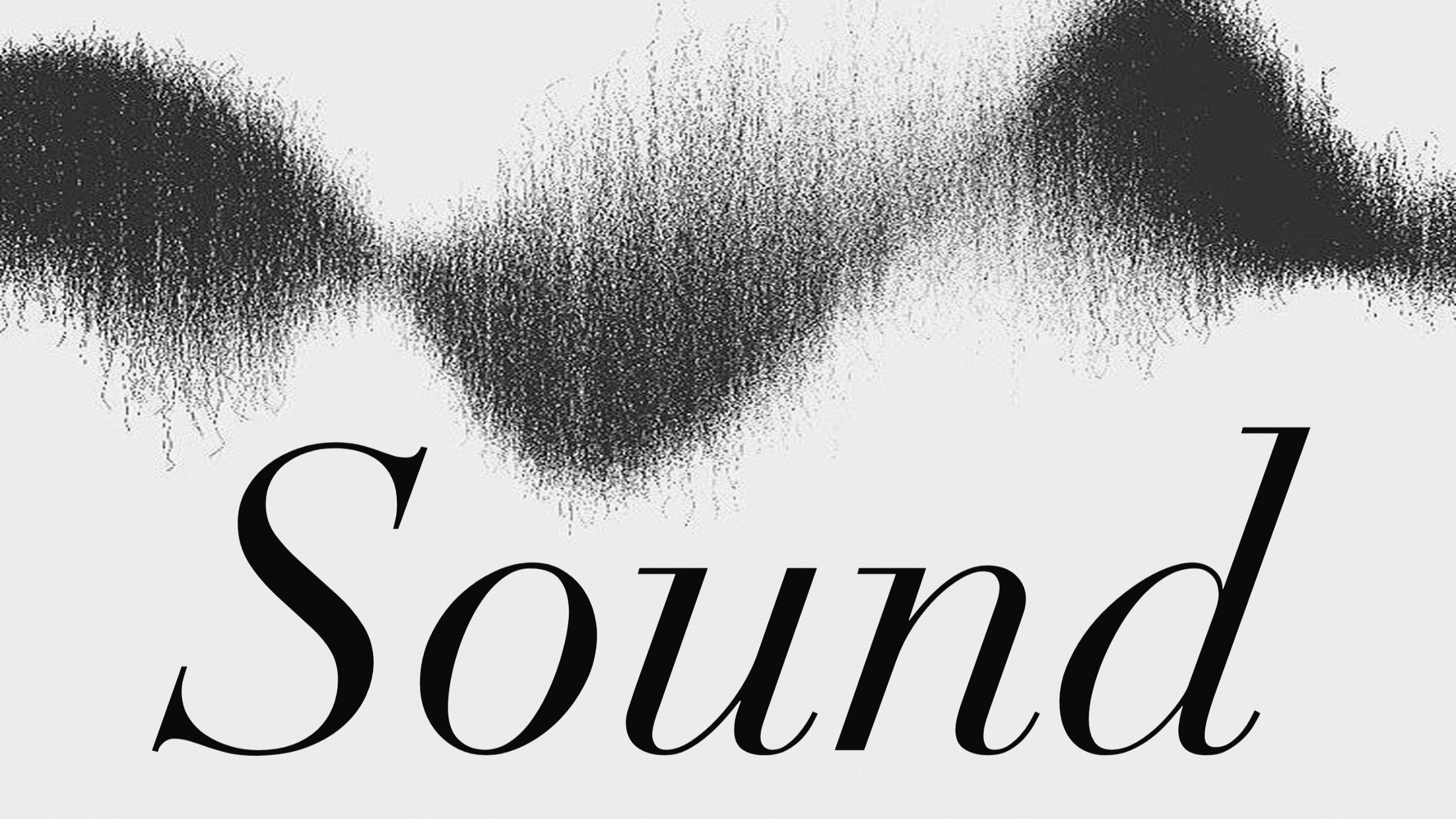
- Large serif letters are recognizable; visible characters left to right: capital “S”, lowercase “o”, lowercase “u”, lowercase “n”, and partial strokes of a lowercase “d” on the right. The letter shapes align with the English word “Sound” (the right side is cropped, the “d” is not fully visible).
- No other clear readable words or numbers are present in the image (note: a narrow black stroke in the upper right resembles a “7” or “1”, but cannot be confirmed as a character).
2. Interface steps / interactive elements (facts)
- The image does not display any interface controls, buttons, menus, progress bars, or step numbers.
- No identifiable UI text (e.g., “Next”, “Cancel”) is present.
3. Chart data / numerical information (facts)
- No scales, axes, numeric labels, or chart annotations are present.
- A black texture resembling a waveform appears at the top, but with no numeric labels.
4. Visible phenomena and visual features (facts)
- Background is light gray or near white.
- A black granular/ink-like texture occupies the top horizontally, distributed in a waveform-like pattern: denser dark areas at left, center, and right, with a deeper sagging trough in the middle.
- The black texture is made of many short thin vertical or slanted strokes and granules, with irregular fine trailing strands downward at the edges.
- The lower half contains large serif printed letters with thin strokes and an elegant style (like book or poster headlines); letters are cropped left and right (left of “S” and right of “d” are both incomplete).
- Overall is monochrome black/gray (no color elements visible).
5. Unreadable or cropped information (facts)
- The narrow black stroke in the upper right cannot be identified (could be a digit, letter, or decorative graphic).
- The lower text is cropped, so full context cannot be confirmed (e.g., whether there are subtitles, author names, or other layout elements).
- No image source, page number, or copyright information is visible.
6. Inferences (clearly marked as inferences, not facts)
- The letters likely form the word “Sound” (based on visible letter shapes), but this is an inference due to the right-side crop.
- The black texture at the top may be intended to represent a sound waveform or an acoustic visualization (given its waveform-like distribution), but it could also be an artistic ink/charcoal texture.
- The overall layout resembles a book cover or poster headline and may be part of a cover design.
- The narrow stroke in the upper right could be a number or decorative typographic element (e.g., volume number, page number, ornament).
7. Source information
- Source information missing: no image source number or URL provided.
SkillPI Creation Analysis
Intended use of the work:
- The image evidence points to a visual asset centered on a large title element likely reading “Sound” and a waveform-like texture, suitable as a visual for showcasing acoustic or sound-effect research, a poster, or a cover graphic. The image itself does not contain audio or step-by-step production details.
Key points from the image evidence (from image_text):
- A waveform-like black granular/ink texture occupies the top; large cropped serif letters (likely forming “Sound”) occupy the lower portion.
- There are no UI elements, numeric annotations, or metadata to infer audio parameters, tools used, or export settings.
- Source information is missing: the image lacks author/source attribution. The provided video URL is: https://www.bilibili.com/video/BV172xF6wEcT/ (kept here as the original reference). The video’s transcript or detailed description was not supplied with the materials, so core production details remain incomplete and require verification.
Steps to convert acoustic research into an audio demo and a visual asset (specific Skill/platform to be verified):
- Note: The user did not specify a particular Skill name or platform. The following are generic, commonly used steps for turning acoustic research into demonstrable sound samples and visuals; they do not assert or require any unverified proprietary skill.
1) Gather and organize original acoustic data and recordings (research notes, measured audio, synthesized outputs).
2) Import audio into a digital audio workstation (DAW) for editing: clean, apply noise reduction, EQ, dynamics processing, and arrange demo samples. Export in standard formats (WAV/MP3).
3) Generate visualizations (waveform or spectrogram) using DAW or dedicated tools, export high-resolution images of waveform/spectrogram for use in design.
4) Combine title typography (as seen in the image), waveform texture, and layout in image-design software to produce a poster/cover visual.
5) Prepare deliverables (audio samples, high-res visuals, source files) and document reproduction steps for review.
Reproduction prerequisites:
- Access to original audio material or the ability to reproduce equivalent audio via the documented measurement/synthesis setup.
- Audio editing tools (DAW), waveform/spectrogram tools, and image-design software, plus basic skills in audio processing and visual layout.
- To reproduce exact sonic and visual results from the referenced video/image, the author’s project files or explicit parameter settings are required; those are not provided here.
Items requiring verification (gaps):
- What does “sound effect skill” specifically refer to — a general sound-design skill, a runnable skill for a voice platform, a plugin, or something else? The user did not specify.
- Does the referenced video (https://www.bilibili.com/video/BV172xF6wEcT/) include demo audio, source projects, or production notes? That information was not included in the provided materials.
- Copyright and reuse permissions for the image and any underlying audio assets are unknown.
Conclusion:
- The visual clearly shows a large typographic title element and a waveform-like texture that can serve as a visual reference for presenting acoustic research. To deliver reproducible audio samples or a platform-specific “skill,” one must obtain the original audio/materials and author-provided project files or detailed production notes. Without those, claiming a full reproduction or delivery is not supported by the supplied evidence.