
Episode 12: Is AI refactoring burning too many tokens? Give it a memory to save 99% tokens — compress the entire codebase into a knowledge graph
Learn a practical workflow to extract code semantics, generate embeddings, build a local knowledge graph and vector index, and wire a retrieval layer to an LLM for fast cross-file queries. Deliverables include a local code knowledge graph, vector search interface, and example retrieval-to-LLM flows to reduce long prompts and speed up lookups.
Image Analysis
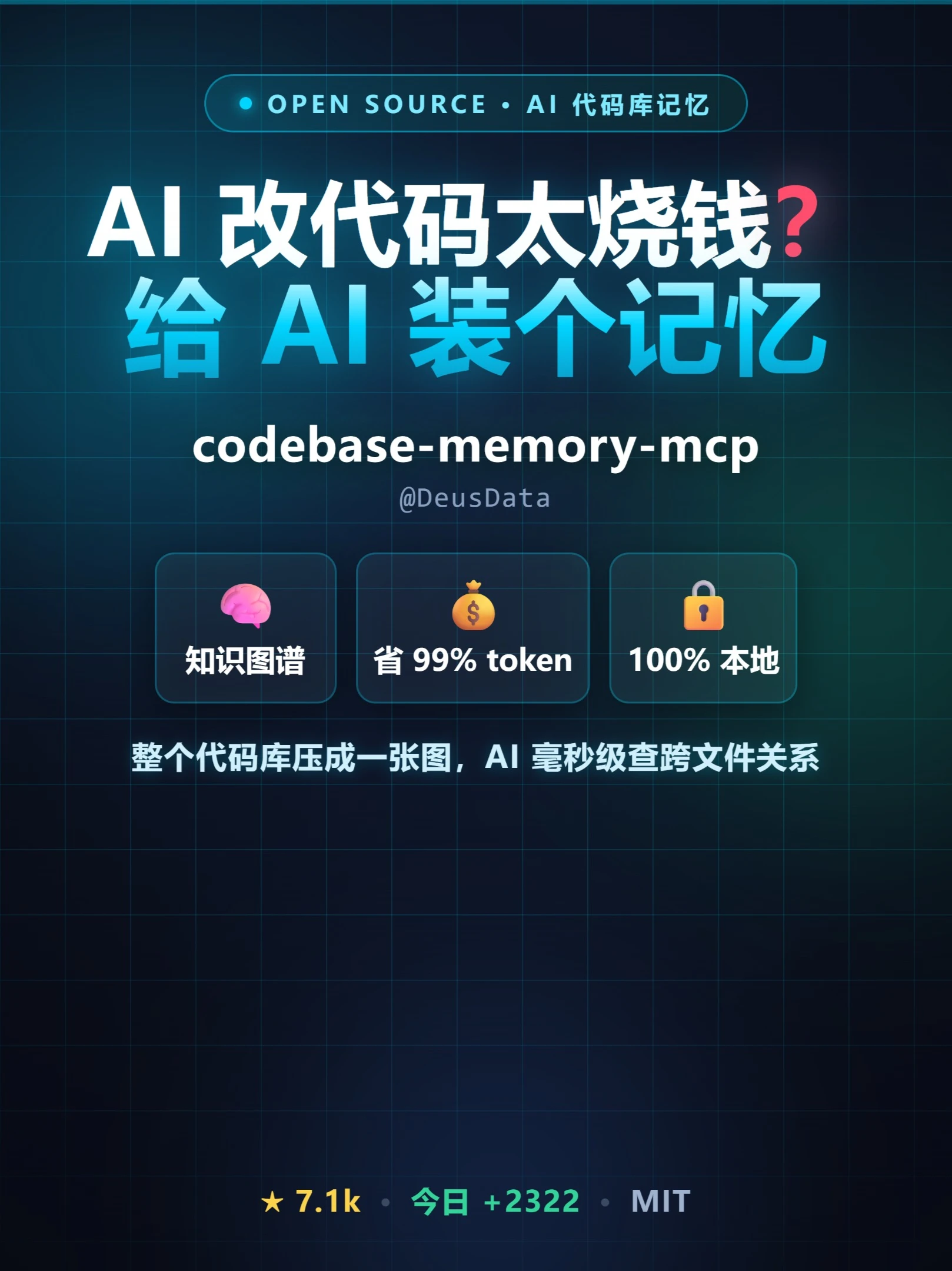
Image 1 — Itemized transcription (translated from Chinese)
1. Readable text (line-by-line, left-to-right/top-to-bottom)
- “OPEN SOURCE · AI 代码库记忆” (in an oval label at the top; a small cyan dot at left)
- Main title line 1: “AI 改代码太烧钱?” (the question mark is red)
- Main title line 2: “给 AI 装个记忆”
- Secondary English: “codebase-memory-mcp”
- Small text: “@DeusData”
- Three boxed short texts (left to right):
- Box 1: “知识图谱” (with a brain icon above)
- Box 2: “省 99% token” (with a money-bag icon above)
- Box 3: “100% 本地” (with a lock icon above)
- Promotional line: “整个代码库压成一张图,AI 毫秒级查跨文件关系”
- Bottom info bar (left to right):
- Yellow star icon + “7.1k”
- Green text “今日 +2322”
- Gray text “MIT”
2. UI / layout elements
- Top oval label: “OPEN SOURCE · AI 代码库记忆”.
- Central title area: two-line large title (a question and a suggestion).
- Project identifier: English repo/name “codebase-memory-mcp” and account “@DeusData”.
- Three feature cards (with icons and short phrases) arranged horizontally: “知识图谱”, “省 99% token”, “100% 本地”.
- Promotional explanatory line below the feature cards.
- Bottom status bar: star count, today’s increase, license (MIT).
3. Charted / quantifiable information shown in the image
- Star count: displayed as “7.1k”.
- Today’s increment displayed as “+2322”.
- The image claims “省 99% token”.
- The image claims “100% 本地”.
- The image displays “MIT”.
4. Visual characteristics
- Dark background (near black / deep blue) with a fine rectangular grid.
- Dominant cyan-blue gradient color, title has bright cyan-to-blue gradient, question mark red.
- Elements have glow/neon effects (title and icon edges have halos).
- The three feature cards are rounded rectangles with subtle inner shadows.
- Icon style is flat and colorful (brain, money-bag, lock).
- Layout is vertically centered with clear top-to-bottom hierarchy.
5. Facts (directly readable or objectively observable in the image)
- The image displays the text: “AI 改代码太烧钱? 给 AI 装个记忆”.
- It shows the identifier “codebase-memory-mcp” and account “@DeusData”.
- The three feature cards read “知识图谱”, “省 99% token”, “100% 本地”.
- Promotional sentence reads: “整个代码库压成一张图,AI 毫秒级查跨文件关系”.
- Bottom shows “★ 7.1k · 今日 +2322 · MIT”.
- Background is a dark grid with cyan-blue highlights and glow.
6. Inferences (marked as inferences, not direct image facts)
- “codebase-memory-mcp” is likely a project or repository name.
- “@DeusData” is likely the project author/publisher account.
- “MIT” likely indicates an MIT license.
- The three cards likely advertise three main features: knowledge graph, token savings, fully local operation.
- The bottom “★ 7.1k” and “今日 +2322” likely indicate total stars and today’s new stars.
7. Unclear / low-resolution items
- Very small text or decorative elements inside the top oval are unreadable at current resolution.
- There may be additional icons/text at the bottom sides that are cropped.
- Any tiny annotations (copyright, footnotes) are not legible.
- It’s unclear if there are secondary captions under the feature icons.
8. Ignored actions
- No actions were taken on any UI elements; the image was only observed and transcribed.
SkillPI Creation Analysis
Intended use and image-evidence summary:
- The image appears to advertise an open-source project or demo (labeled “codebase-memory-mcp / @DeusData”) that claims to “compress the entire codebase into one graph” so AI can query cross-file relationships in milliseconds and advertises token savings and local operation. Those promotional statements are visible in the image (see image_text).
Likely associated skills and a high-level reproduction outline (requires verification of project specifics):
1) Code semantic extraction: parse source code to identify entities (functions, classes, modules), comments, and references to build nodes and edges representing code relationships.
2) Vectorization/embeddings: produce embeddings for code fragments, comments, and documentation to enable similarity search and linking.
3) Graph or index construction: organize extracted entities into a knowledge graph and/or build a vector index to support efficient lookup and neighborhood queries.
4) Retrieval layer and LLM integration: use retrieved graph nodes or nearby vectors as context for an LLM (retrieval-augmented generation, RAG) instead of sending whole files as tokens.
5) Local deployment: run embedding generation, index storage, and retrieval services locally to meet privacy/offline requirements.
Prerequisites for attempting reproduction:
- Access to the target codebase (source files and documentation).
- An embedding method or model (local or hosted) to encode code and docs into vectors and sufficient compute for embedding generation.
- A local storage/retrieval backend (vector DB or graph DB) that supports low-latency queries.
- A middleware layer that assembles retrieved context and interacts with an LLM for downstream tasks.
Items that must be verified (claims visible in image but not validated here):
- The concrete methodology and measurement behind the “save 99% token” claim (which scenarios and metrics were used).
- Whether “100% local” covers embedding generation, indexing, and model inference, or whether external downloads/services are required.
- The actual repository or release corresponding to “codebase-memory-mcp” and whether the source code and docs are available.
- Which embedding models, index backends, and graph/data structures the project uses, and whether they are open-source.
Note and caution:
- The above is a technical interpretation and suggested reproduction path based on common patterns (embeddings + vector search + graph assembly + RAG). It is not a validation of the project’s claims. To confirm performance and local/offline guarantees, obtain the project source and run controlled tests.