
Wait — Cangjie-Skill is so powerful, why isn't it popular on Xiaohongshu?
Step-by-step guide to prepare source materials, run cangjie-skill's distillation pipeline, load the resulting skill package into an agent, and test it locally. Covers data prep, model/backend considerations, and verification points to check before reuse or redistribution.
Image Analysis
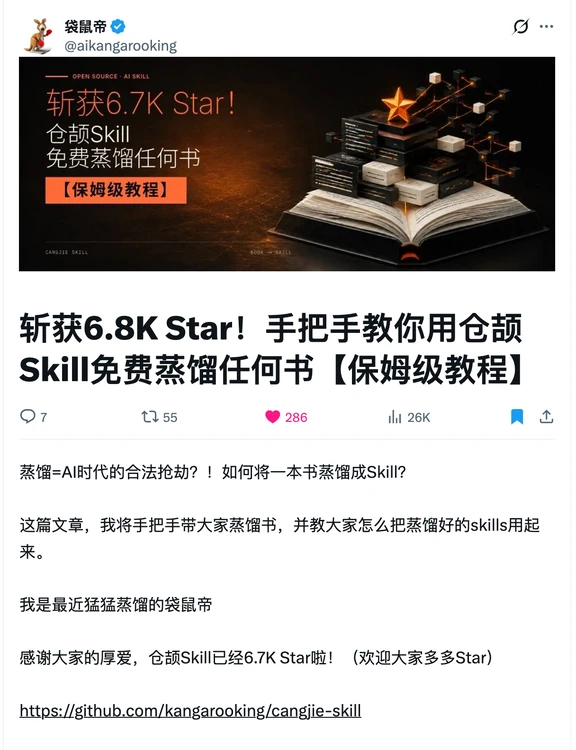
Image 1 — Observable facts (readable text, UI elements, chart data and visible phenomena)
- Top account area (avatar at left, an icon at the right, likely the post/publish icon):
- Visible text: 袋鼠帝
- Visible text (account): @aikangarooking
- Banner image (upper visual area) readable text:
- Small English text (likely top-left of banner): OPEN SOURCE · AI SKILL
- Large highlighted orange text: 斩获6.7K Star!
- Mid-sized text: 仓颉Skill
- Mid-sized text: 免费蒸馏任何书
- Orange bracketed button text: 【保姆级教程】
- Banner right side contains an open book, 3D star and cube illustrations (decorative)
- Post title area (large black text):
- 斩获6.8K Star!手把手教你用仓颉Skill免费蒸馏任何书【保姆级教程】
- Post bottom interaction bar (icons + numbers):
- Comment icon + 7
- Repost/retweet icon + 55
- Heart (pink) icon + 286
- Bar/analytics icon + 26K
- Bookmark icon (far right)
- Readable post body text (paragraphs):
- 蒸馏=AI时代的合法抢劫?!如何将一本书蒸馏成Skill?
- 这篇文章,我将手把手带大家蒸馏书,并教大家怎么把蒸馏好的skills用起来。
- 我是最近猛猛蒸馏的袋鼠帝
- 感谢大家的厚爱,仓颉Skill已经6.7K Star啦!(欢迎大家多多Star)
- https://github.com/kangarooking/cangjie-skill
- Visual/layout observations:
- The banner and the post body show “6.7K Star” and “6.8K Star” in two places (inconsistent values visible).
- Banner uses dark background with orange/white text; right side shows book and star 3D illustrations.
- The post follows a typical social-media post layout: avatar + account name, banner image, title, body, interaction stats row.
Unclear or unreadable items (noted individually):
- Very small text on banner corners might read “CANGJIE SKILL” or “BOOK + SKILL” but it’s too small/blurred to confirm exact spelling/case.
- The top-right icon meaning cannot be determined precisely (appears pen-like or post-related).
- Several small words or decorative text on the banner cannot be verified due to resolution/font size.
Reasonable inferences (based on visible elements, not direct readable facts):
- The “6.7K Star” and “6.8K Star” labels likely refer to the GitHub repository star count (the post body includes a GitHub link, making this a reasonable inference).
- The interaction icons and numbers (7, 55, 286, 26K) likely correspond to comment, repost, like, and views/analytics respectively (icon semantics align with common social UI conventions).
- The pink heart with 286 likely denotes likes or favorites (inference).
- The 26K next to a bar/analytics icon likely indicates total views/impressions rather than a single interaction type (inference).
Explicit URL present in the image (preserved exactly):
- https://github.com/kangarooking/cangjie-skill
(The above is a transcription of visible text and reasonable inferences from the image; no image actions were performed.)
SkillPI Creation Analysis
Intended use and claims:
The post presents the open-source project “Cangjie Skill (cangjie-skill)” and claims it can distill books, courses, or podcasts into AI-callable skill packages that Agents can load and use. The post gives examples (ad-guidance distilled into ad-running skills, research books into skill collections) and notes that some users package and sell distilled skills.
Verifiable image evidence:
- The banner and post body display the GitHub link: https://github.com/kangarooking/cangjie-skill.
- The image shows a 4-step onboarding summary: prepare materials → give to AI → automatic distillation → load into Agent.
- The banner and body text also display star counts (6.7K / 6.8K) but those values are inconsistent across the image.
High-level steps to use the tool (based on the source description; treat as a workflow outline to confirm with the repository):
1) Prepare source materials: obtain the book text, course transcripts, or podcast transcriptions and format them as required.
2) Provide materials to cangjie-skill per the repository’s input format and instructions.
3) Run the distillation process in the repo to generate a skill package (likely producing skill metadata, retrieval indexes or prompt templates — check repo docs for exact outputs).
4) Integrate the generated skill package into an Agent framework and design test prompts to verify retrieval and correct application of the distilled knowledge.
Prerequisites to reproduce or evaluate:
- Read the cangjie-skill GitHub README and follow the dependency/installation instructions (Python environment, libraries, any required tooling).
- Decide on an LLM backend: verify whether the tool requires a remote API (and API key) or supports local models; the choice affects privacy and cost.
- Ensure sufficient compute and storage for processing whole books or large corpora (CPU/GPU and disk requirements depend on implementation and model choice).
- Confirm data format requirements and that you have legal right/permission to process the chosen source materials.
Items to verify before relying on the tool:
- Which LLMs or inference backends cangjie-skill supports and how to configure them (local vs. API).
- Exact structure of the distilled skill package and how to connect it to popular Agent frameworks (integration examples or adapters may be in the repo or absent).
- License and copyright implications of distilling and redistributing content; whether selling distilled packages complies with original content licenses.
- Privacy claims: whether the workflow indeed runs fully locally under your configuration or whether any network calls might send data externally.
- Quality metrics: how accurate and reliable the distilled skills are in practice—this requires empirical tests using representative queries.
Closing factual note:
The post and its image provide a clear pointer (GitHub link) and a high-level 4-step workflow. Actual reproduction and operational details should be validated against the cangjie-skill repository documentation and by testing with chosen LLM backends, environment configurations, and representative source materials.